

Adapters
Eliminate compatibility barriers with EV Devil’s precision-engineered charging adapters. Whether you need seamless NACS, J1772, or CCS integration, our heavy-duty adapters guarantee zero drop in charging speed or safety. Connect to any station effortlessly and experience a frictionless, high-power charge, no matter what electric vehicle you drive.
Filter by Model
- Tesla Model Y (1)
- Tesla Model 3 (1)
- Tesla Model S (1)
- Tesla Model X (1)
- Tesla Cybertruck (1)
Filter by Generation
Showing the single result
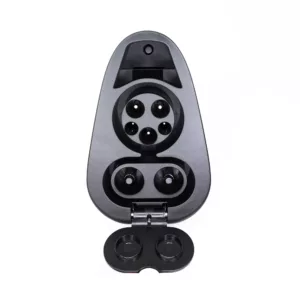
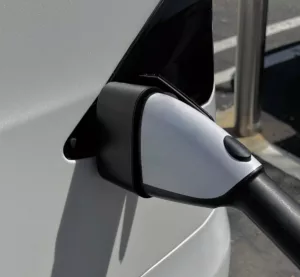
Tesla CCS1 & J1772 Combo Adapter – Charge at Multiple Networks (2021–Present)
Choosing the Right EV Charging Adapter
An EV charging adapter can allow a vehicle to connect to compatible charging equipment with a different connector interface. However, choosing the right adapter involves more than matching the physical shape of two plugs.
The first step is to identify what you are connecting to what. For example, a J1772 → NACS adapter is designed for a different application from a CCS1 → NACS adapter. The former is generally used for AC charging, while the latter is used for compatible DC fast-charging applications.
Before purchasing an adapter, check:
- Vehicle connector: The connector fitted to your EV.
- Charging equipment connector: The connector on the charger or charging station.
- Adapter direction: Which connector is intended to plug into the vehicle and which connects to the charging equipment.
- Charging type: Whether the adapter is designed for AC charging or DC fast charging.
- Electrical rating: The adapter's supported voltage and current.
- Charging standard: The specific charging system and communication protocol supported.
- Vehicle and charger compatibility: The combinations specifically supported by the adapter manufacturer.
A properly matched adapter is part of the charging system and must be suitable for the complete vehicle-to-charger connection.
NACS, J1772 & CCS1 Adapters
North American EV drivers may encounter three important connector families: NACS, J1772 and CCS1. Understanding which connector is on your vehicle and which is on the charging equipment is essential when selecting an adapter.
NACS is used for both AC charging and DC fast charging. J1772 is primarily associated with AC Level 1 and Level 2 charging. CCS1 combines a J1772-style upper connector with additional DC power contacts for DC fast charging.
Because these systems are designed for different charging applications, an adapter should never be selected solely because the connectors appear physically compatible.
For example:
- J1772 → NACS: Used to connect a compatible NACS-equipped vehicle to J1772 AC charging equipment.
- NACS → J1772: Used for the reverse AC connection, where the specific adapter and vehicle support that application.
- CCS1 → NACS: Used to connect a compatible NACS-equipped vehicle to CCS1 DC fast-charging equipment.
- NACS → CCS1: The reverse DC connection, where specifically supported by the vehicle, charging equipment and adapter.
The arrow indicates the connector on the adapter's input/vehicle or equipment side → the connector on the other side, so always check the product description carefully rather than relying on the name alone.
AC vs. DC Charging Adapters
One of the most important considerations when choosing an adapter is whether it is intended for AC charging or DC fast charging.
AC charging is commonly used at home, workplaces and destination charging locations. The vehicle's onboard charger converts the incoming AC electricity into DC power for the battery. J1772 and NACS are both used for AC charging in North America.
DC fast charging works differently. The charging station supplies DC power to the vehicle's high-voltage battery, with the vehicle and charger communicating to control the charging session. CCS1 and NACS are used for DC fast charging in North America.
An AC adapter should therefore not be assumed to work for DC charging simply because its connectors physically fit. Likewise, a DC adapter designed for a particular charging system should not be treated as a general-purpose connector converter.
Always verify the adapter's stated charging application before use.
Understanding Adapter Direction
Adapter names can be confusing because the same two connector types can be used in opposite directions.
For example, J1772 → NACS and NACS → J1772 are not necessarily interchangeable products. The connector on each end serves a different role, and the intended vehicle and charging-equipment combination can differ.
The same principle applies to CCS1 and NACS adapters.
When shopping, identify:
- The connector on your vehicle.
- The connector on the charging station.
- Whether the connection is AC or DC.
- The direction of the adapter required.
- Whether the specific vehicle and charging station are supported.
This approach is more reliable than searching for a generic term such as "Tesla charging adapter" because several different adapter types can be described that way.
Charging Speed & Adapter Ratings
An adapter does not increase an EV's maximum charging capability. Actual charging speed is determined by the capabilities and limits of the vehicle, charging equipment, electrical supply and, where applicable, the adapter.
An adapter can, however, become a limiting component if its electrical rating is below the capabilities of the vehicle or charging equipment.
When comparing adapters, consider:
- Current rating: The maximum current the adapter is designed to handle.
- Voltage rating: The maximum voltage supported by the adapter.
- Power capability: The maximum power the adapter is designed to handle based on its electrical ratings.
- Charging type: Whether the adapter supports AC charging, DC fast charging or a specific application.
- Vehicle compatibility: Which vehicles are confirmed to work with the adapter.
- Charging-equipment compatibility: Which charging stations or connector types are supported.
For example, an adapter rated for a particular current does not mean the vehicle will charge at that current. The vehicle may request a lower charging rate, or the charging station may have a lower output limit.
The safest approach is to consider the adapter as one component in the complete charging chain rather than assuming its maximum rating represents the charging speed you will receive.
Why Physical Compatibility Isn't Enough
EV charging involves more than transferring electrical power between two connectors. Depending on the charging system, the vehicle and charging equipment also communicate to establish and manage the charging session.
As a result, two connectors may appear physically compatible without supporting the same charging application.
This is especially important with NACS, J1772 and CCS1 adapters. An adapter must be designed for the appropriate electrical and communication requirements of the intended connection.
For high-power DC charging in particular, do not use a generic connector adapter unless the manufacturer explicitly states that it supports the intended vehicle, charging equipment and charging application.
Tesla & NACS Charging Adapters
Tesla vehicles have historically used Tesla's proprietary connector in North America, which is now standardized as NACS (North American Charging Standard). As a result, Tesla owners may encounter several different adapter applications.
The most familiar example is a J1772 → NACS adapter, which allows a compatible Tesla/NACS vehicle to connect to J1772 AC charging equipment. This can be useful at public destination chargers, workplace chargers and other AC charging locations equipped with J1772 connectors.
A different product is a CCS1 → NACS adapter, which is intended for compatible Tesla/NACS vehicles to use CCS1 DC fast-charging equipment. This is a DC fast-charging application and should not be confused with a J1772 adapter.
There are also adapters designed in the opposite direction, such as NACS → J1772 or NACS → CCS1, for compatible non-NACS vehicles and charging equipment. These are separate applications and are not automatically interchangeable.
When selecting a Tesla/NACS adapter, identify both the connector on the vehicle and the connector on the charging equipment, then confirm that the specific adapter supports that combination.
Using an Adapter Safely
EV charging adapters can carry substantial electrical power and should always be used within their specified operating limits.
Before charging, inspect the adapter and connectors for visible damage, contamination, excessive wear or signs of overheating. Make sure the connection is fully seated and follow the manufacturer's instructions.
Never exceed the adapter's stated voltage or current rating, and do not use an adapter for an AC or DC application that it was not designed to support.
If the adapter, connector or charging cable becomes unusually hot, shows signs of melting or damage, or produces an unusual smell during charging, stop the charging session and discontinue use until the cause has been assessed.
For high-power charging, use only adapters specifically designed and rated for the intended charging application.
Do You Need an EV Charging Adapter?
Whether you need an adapter depends on the connectors fitted to your vehicle and the charging equipment you want to use.
If your EV and charging station use compatible connectors, an adapter may not be necessary. If they use different but compatible charging interfaces, an appropriate adapter may allow you to use that charging equipment without replacing the vehicle or charging station.
Before purchasing, identify the connector on your EV and the connector on the charging equipment. Then determine whether the connection is AC or DC and verify that an adapter is specifically available for that application.
For drivers who regularly charge at different locations, carrying the appropriate adapter can provide additional charging flexibility. However, an adapter should always be selected based on the actual charging equipment and vehicle combination rather than simply on connector appearance.
EV Charging Adapter FAQs
What is an EV charging adapter?
An EV charging adapter is an accessory that allows a compatible vehicle and charging system with different connector interfaces to be connected. The adapter must be designed for the specific charging application and electrical requirements.
What is a J1772 → NACS adapter?
A J1772 → NACS adapter is generally used to connect a compatible NACS-equipped vehicle, such as a Tesla, to J1772 AC charging equipment. It does not convert AC electricity into DC or increase the vehicle's charging capability.
What is a CCS1 → NACS adapter?
A CCS1 → NACS adapter is designed for compatible NACS-equipped vehicles to connect to CCS1 DC fast-charging equipment. It is a different type of adapter from a J1772 → NACS adapter and should only be used where the specific vehicle, adapter and charging station are supported.
Is a J1772 adapter the same as a CCS1 adapter?
No. J1772 is primarily used for AC charging, while CCS1 adds additional DC power contacts for DC fast charging. A J1772 adapter and a CCS1 adapter serve different charging applications.
Can I use any adapter if the connectors physically fit?
No. Physical fit does not establish electrical or communication compatibility. The adapter must be designed for the specific vehicle, charging equipment and charging application.
Does an EV charging adapter reduce charging speed?
Not necessarily. A properly rated adapter does not inherently reduce the charging speed, but its electrical limits can restrict charging if they are lower than the capabilities of the vehicle or charging equipment. The vehicle and charger may also impose lower limits.
Can an adapter make my EV charge faster?
No. An adapter cannot increase the maximum charging rate supported by your vehicle or charging equipment. It can only enable a compatible connection where an adapter is required.
Can I use a Tesla/NACS adapter with another EV?
It depends on the adapter and the vehicle. NACS adapters are not universal, and an adapter designed to connect a NACS vehicle to J1772 or CCS1 equipment may have a different application from one designed for a non-NACS vehicle to use NACS charging equipment.
Can I use an AC adapter for DC fast charging?
No, unless the specific adapter is explicitly designed and rated for the DC charging application. AC and DC charging use different electrical and communication arrangements.
How do I know which EV charging adapter I need?
Identify the connector on your vehicle, the connector on the charging equipment and whether you are using AC or DC charging. Then select an adapter whose specifications explicitly support that combination.
Explore Related Charging Products
Adapters are one part of a complete EV charging setup. If you need a dedicated cable rather than a connector adapter, explore Charging Cables for additional cable options and configurations.
For fixed home charging, explore Home Chargers & Charging Stations for wall-mounted charging equipment. If you need a charging solution that can travel with your vehicle, explore Portable EV Chargers (EVSE).
For storing and organizing charging cables and connectors, explore Wall Mounts, Holders & Cable Management.