

Home Chargers & Charging Stations
Transform your garage into a high-performance refueling hub with EV Devil’s premium home charging stations. Engineered for maximum kilowatt output and relentless reliability, our Level 2 wall boxes deliver lightning-fast, overnight power. Ditch range anxiety and wake up every morning with a battery primed to dominate the road.
Filter by Model
- Tesla Model Y (1)
- Tesla Model 3 (1)
Filter by Generation
Showing the single result
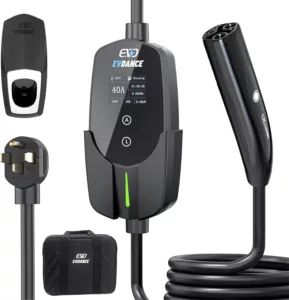
Tesla Model 3 & Model Y Level 2 EV Charger – Fast Home Charging (2020–2026)
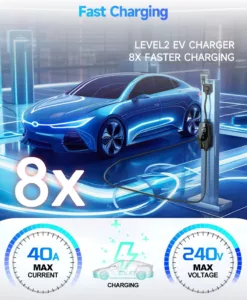
Charge your Tesla Model 3 and Model Y efficiently with the Level 2 EV Charger. This 40A charger delivers up to 9.6kW of power, allowing for significantly faster charging compared to standard options. Enjoy customizable charging speeds and a user-friendly design for convenient home use.
Choosing a Home EV Charger
A home EV charger should be selected based on your vehicle's charging capability, your electrical supply and how you plan to charge. For most drivers, the goal is not simply to choose the charger with the highest advertised power, but to find a charging station that works efficiently with the vehicle and electrical circuit available.
Start by checking your EV's maximum AC charging rate. There is little benefit in choosing a charger with substantially more available power than the vehicle can accept. You should also consider the available voltage and amperage at the intended installation location, as these determine how much power the charger can deliver.
Other factors include connector type, cable length, plug-in or hardwired installation, indoor or outdoor suitability and whether smart features such as Wi-Fi or app-based monitoring are important to you.
For everyday home charging, a properly installed Level 2 charger can provide a practical balance between charging speed and convenience. The best choice is ultimately the charger that matches your EV, electrical setup and normal charging requirements.
Level 1 vs. Level 2 Home Charging
Home EV charging is commonly divided into Level 1 and Level 2 charging.
Level 1 charging uses a standard household electrical outlet and typically provides a lower charging rate. It can be sufficient for drivers with low daily mileage or those who have plenty of time to recharge between journeys.
Level 2 charging uses a higher-voltage electrical supply and can provide substantially more charging power. It is often preferred for regular home charging because it can replenish more energy during an overnight charging session.
The actual charging speed of either setup depends on several factors, including the vehicle's onboard AC charger, the EV charging station, available electrical capacity and the battery's state of charge.
For drivers who regularly cover longer distances or want more charging flexibility at home, Level 2 is generally the more practical choice. Drivers with lower daily mileage may find Level 1 adequate for their needs.
Charging Power, Amperage and Charging Speed
Home charging power is influenced by the voltage and current available to the charging station. Chargers are commonly described by their maximum amperage, while charging power is generally expressed in kilowatts (kW).
A higher-rated home charger can provide more charging power when the vehicle and electrical installation can support it. However, the charger's advertised maximum output is not necessarily the speed your EV will actually receive.
The vehicle's onboard AC charging capability can limit the charging rate, even when a more powerful charging station is installed. The electrical circuit can also impose a limit based on its voltage, amperage and installation requirements.
When comparing home chargers, consider:
- Maximum output: The charger's rated charging power.
- Amperage: The maximum current the charger can supply.
- Voltage: The electrical supply required by the charger.
- Vehicle capability: The maximum AC charging rate supported by your EV.
- Circuit capacity: The electrical capacity available at the installation location.
Choosing a charger that appropriately matches these factors can provide efficient charging without paying for capacity your vehicle or electrical system cannot use.
EV Connector Compatibility
Before purchasing a home charging station, confirm that its vehicle connector is compatible with your EV. The connector determines how the charging station connects to the vehicle, while the vehicle and charger specifications determine the charging capabilities available.
For North American EVs, NACS and J1772 are important connector types to understand. Tesla vehicles use NACS for their native charging connection, while J1772 remains common among many other EVs for AC charging.
Connector compatibility can also be addressed with an appropriate adapter in some circumstances. However, an adapter should only be used when the manufacturer confirms compatibility for the specific charging application.
When selecting a home charger, check:
- Your vehicle's charging connector
- The charger's connector type
- AC charging capability of your vehicle
- Maximum output of the charger
- Any required adapter
- The charger's stated vehicle compatibility
Do not rely solely on the physical appearance of a connector. Electrical specifications and charging standards also need to be compatible.
Plug-In vs. Hardwired Home Chargers
Home charging stations can generally be installed as either plug-in or hardwired units, depending on the charger's design and the electrical installation.
Plug-in chargers connect to a compatible outlet and can offer greater flexibility if you already have the appropriate electrical circuit installed. They may also be easier to remove or relocate if your charging requirements change.
Hardwired chargers are connected directly to the home's electrical system and can provide a permanent installation without a wall plug. They can be a practical choice for dedicated charging locations and certain outdoor installations.
The choice depends on the charger's specifications, available electrical infrastructure and local installation requirements. Some charging stations support only one installation method, while others may support more than one configuration.
Always follow the manufacturer's installation instructions and use a qualified electrician where required. Do not install a charger on a circuit that is not appropriately rated for its electrical load.
Home EV Charger Installation & Electrical Requirements
A Level 2 home charging station typically requires a suitable higher-voltage electrical supply and a properly rated circuit. The exact requirements vary according to the charger's maximum output and installation method.
Before purchasing or installing a charger, consider whether the intended location has:
- An appropriate electrical supply
- Sufficient circuit capacity
- The correct outlet, where a plug-in charger is used
- Suitable wiring and protection
- Adequate space for the charger and cable
- A practical route for the charging cable
Your home's existing electrical service may also need to be assessed before installing a higher-powered charger. In some situations, the available electrical capacity may limit the charger that can be installed or require electrical upgrades.
Because electrical installation requirements vary by charger, property and jurisdiction, follow the manufacturer's installation instructions and applicable local electrical requirements. A qualified electrician can determine whether the intended circuit and installation location are suitable.
Indoor and Outdoor Home Charging
A home charging station may be installed in a garage, carport or other suitable location depending on its environmental rating and installation requirements.
For garage installations, consider cable reach, mounting height, vehicle parking position and convenient access to the connector. The charger should be positioned so that the cable can reach the vehicle without creating unnecessary trip hazards or excessive strain.
For outdoor installations, the charger must be specifically suitable for the intended environment. Check its weather-resistance and environmental ratings rather than assuming that every home charging station can be installed outdoors.
Cable management is also important. A wall-mounted holder or connector holster can keep the charging cable and plug off the ground between charging sessions and help create a cleaner, more organized charging area.
Smart EV Charging Features
Some home charging stations include connected features that allow drivers to monitor and manage charging through a mobile app or other connected system.
Depending on the charger, smart features may include charging schedules, energy monitoring, charging-session information, notifications and remote control. These features can be useful for drivers who want greater visibility over when and how their EV charges.
Smart functionality varies considerably between charging stations, so check the individual product specifications before purchasing. Features such as Wi-Fi connectivity or app control should not be assumed simply because a charger is marketed as a smart EV charger.
For many drivers, smart features are secondary to the fundamentals: reliable charging, correct vehicle compatibility, appropriate electrical capacity and a suitable installation location.
Frequently Asked Questions
What is a Level 2 home EV charger?
A Level 2 home EV charger uses a higher-voltage electrical supply than Level 1 charging and can provide substantially more charging power. It is commonly used as a dedicated home charging solution for EV owners who want convenient overnight charging.
How fast will a home EV charger charge my car?
Charging speed depends on the charger's output, your home's electrical supply and the vehicle's maximum AC charging capability. The highest-rated charger does not necessarily provide the highest charging speed if the vehicle or electrical circuit has a lower limit.
Do I need a 240V outlet for a Level 2 EV charger?
Many Level 2 home chargers require a suitable 240V electrical supply in North American installations, although the exact requirements vary by product. Check the charger's specifications before purchasing and have the intended installation assessed if necessary.
Should I choose a plug-in or hardwired EV charger?
Either can be appropriate depending on the charger, electrical installation and intended location. Plug-in chargers can offer greater flexibility, while hardwired chargers provide a permanent connection. Check the specific charger's installation requirements.
Can I install an EV charger outdoors?
Some home charging stations are designed for outdoor installation, while others are intended for protected or indoor environments. Check the charger's environmental and installation ratings before installing it outside.
Does a higher-kW charger charge every EV faster?
No. Charging speed is limited by the capabilities of the vehicle, charger and electrical supply. A higher-output charging station cannot make an EV accept more AC power than its onboard charging system allows.
Can I use a Tesla with a non-Tesla home charger?
It depends on the charger's connector and the Tesla vehicle. A compatible NACS charger can connect directly to a Tesla, while other charging equipment may require an appropriate adapter. Always check the specific vehicle and charger compatibility.
What size home EV charger should I buy?
Choose a charger based on your EV's maximum AC charging capability, the electrical capacity available at your home and your daily charging requirements. A charger with more output than your vehicle or electrical circuit can use may provide little practical benefit.
Related Charging Accessories
A home charging setup can be complemented with the right accessories for different charging situations. Explore Charging Cables for additional cable options, Adapters for compatible connector combinations, and Wall Mounts, Holders & Cable Management for organized storage of your charging equipment.
If you need a Tesla charging solution that can travel with your vehicle, explore Portable EV Chargers (EVSE) for flexible charging away from a dedicated home station.